As businesses generate increasing amounts of digital information, having a reliable and scalable data storage infrastructure has become essential. Business files, databases, applications, backups, virtual machines, surveillance footage, and customer information all require secure storage that can support daily operations and future growth.
CITS provides professional SAN and NAS storage solutions in Egypt for businesses of different sizes and industries. Our solutions help organizations centralize their data, improve accessibility, support business applications, strengthen data protection, and manage increasing storage requirements more efficiently.
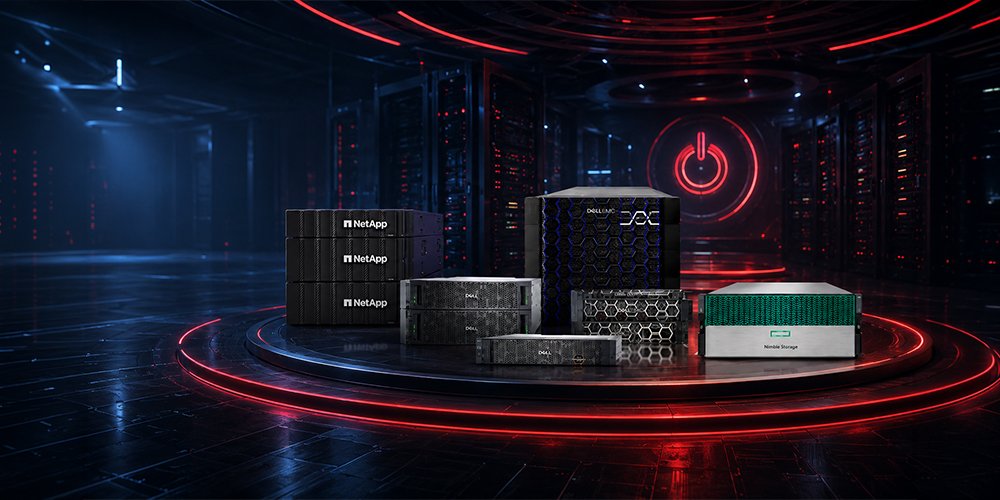
We provide storage solutions from leading technology manufacturers, including Dell, HPE, NetApp, Pure Storage, and QNAP. Our team helps each customer select the most suitable storage architecture based on workload, capacity, performance, availability, security, and budget requirements.
Whether your organization requires a simple file storage system or a high-performance enterprise storage environment, CITS can help you design and implement the right solution.
Professional Data Storage Solutions for Businesses
Modern organizations depend on data to operate. Employees need access to shared files, applications require fast storage, databases must remain available, and backup systems need sufficient capacity to protect critical information.
Using disconnected hard drives, individual computers, or poorly planned storage systems can create several challenges. These may include limited capacity, slow access, duplicate files, weak backup procedures, and difficulty controlling who can access important information.
Centralized business storage provides a more organized approach. It allows data to be stored within a controlled environment that can be monitored, protected, expanded, and managed by the IT team.
CITS provides data storage solutions in Egypt for requirements such as:
- Centralized file sharing
- Database storage
- Business application hosting
- Virtualization environments
- Backup and recovery systems
- Video surveillance storage
- Email and collaboration platforms
- Data center infrastructure
- Private cloud environments
- High-availability applications
- Archiving and long-term data retention
Our team evaluates the business environment before recommending a storage solution. This helps ensure that the proposed system provides the required capacity and performance without adding unnecessary complexity.
What Is NAS Storage?
Network Attached Storage, commonly known as NAS, is a file-level storage system connected to a local or wide area network. It allows authorized users and devices to access shared files from a centralized location.
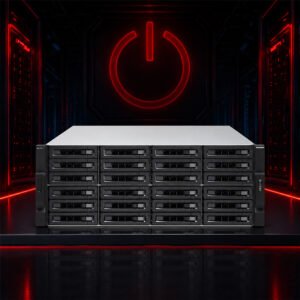
NAS storage can be suitable for small and medium-sized businesses that need an organized and cost-effective way to store documents, media files, backups, and shared business data.
Instead of storing important files separately on employees’ computers, businesses can use a NAS device to centralize their data. This makes file sharing, access management, backup, and administration easier.
NAS systems can be used for:
- Shared company files
- Employee folders
- Document storage
- Multimedia libraries
- Local backups
- Remote file access
- Surveillance recordings
- Departmental data storage
- Small business applications
One of the main advantages of NAS storage is its relative ease of deployment and management. It can provide a practical solution for organizations that need centralized file storage without implementing a complex data center infrastructure.
However, the correct NAS configuration depends on several factors, including the number of users, file sizes, network speed, backup requirements, and expected future capacity.
What Is SAN Storage?
A Storage Area Network, or SAN, is a dedicated high-speed network that provides block-level storage to servers and business applications.
SAN storage is commonly used in larger organizations and data centers that require high performance, low latency, scalability, and reliable access to critical data.
From the server’s perspective, SAN storage can appear as locally attached storage even though the data is stored on a separate centralized system. This makes SAN suitable for demanding workloads such as databases, virtualization platforms, ERP systems, and high-availability applications.
SAN storage solutions can support:
- Enterprise databases
- Virtual machines
- ERP and CRM systems
- Data center applications
- Private cloud infrastructure
- High-performance computing workloads
- Business continuity environments
- Backup and disaster recovery
- Application clusters
- Large-scale data processing
SAN environments are generally more complex than NAS systems. They may involve storage arrays, dedicated switches, host bus adapters, controllers, and specialized management tools.
For this reason, SAN storage should be carefully designed based on the applications, servers, required performance, redundancy, network architecture, and growth expectations of the organization.
NAS vs SAN Storage
Although both NAS and SAN provide centralized data storage, they are designed for different requirements.
NAS provides file-level access. Users and devices access shared folders and files through the network. It is commonly used for document sharing, backups, media storage, and general business data.
SAN provides block-level access. It presents storage resources directly to servers and applications. This makes it more suitable for databases, virtualization, enterprise applications, and workloads that require high-speed storage performance.
NAS is often easier and more cost-effective to deploy. SAN can provide higher performance, greater scalability, and advanced availability features, but usually requires more specialized planning and management.
The right option depends on the business workload. Some organizations may use NAS, others may require SAN, while larger environments may use both technologies for different purposes.
CITS helps customers compare the available options and select the solution that matches their operational needs.
Dell Storage Solutions in Egypt
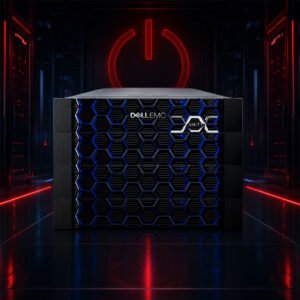
Dell storage solutions can support businesses ranging from small offices to large enterprise data centers.
CITS provides Dell storage in Egypt for file storage, virtualization, database workloads, backup, disaster recovery, and other business applications.
Dell storage platforms can be configured with different capacity, performance, connectivity, and redundancy options. The appropriate configuration depends on the type of applications being used and the volume of data that must be stored.
Our team helps businesses evaluate their requirements and choose a Dell storage solution that can support current workloads while allowing room for future expansion.
HPE Storage Solutions in Egypt
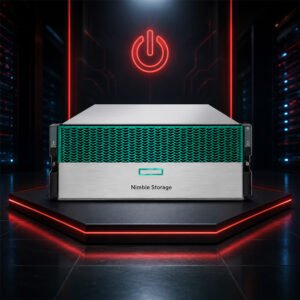
HPE provides storage platforms suitable for a wide range of business and enterprise environments.
CITS offers HPE storage solutions in Egypt for organizations that need centralized storage, high availability, virtualization support, database performance, and scalable capacity.
Depending on the business requirements, HPE storage can be integrated with servers, networking, backup systems, and virtualization platforms to create a complete infrastructure environment.
Our specialists consider the required storage capacity, application performance, number of connected servers, availability targets, and data protection needs before recommending a suitable HPE storage configuration.
NetApp Storage Solutions
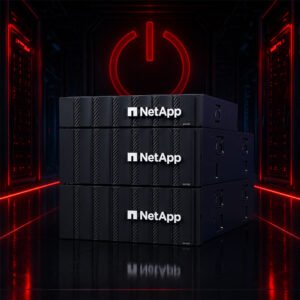
NetApp storage solutions are commonly used by organizations that require centralized data management across different workloads and environments.
These solutions can support file storage, block storage, virtualization, backup, disaster recovery, and hybrid infrastructure requirements.
CITS can help businesses assess whether a NetApp storage solution is appropriate for their applications, performance expectations, and data management strategy.
The goal is to provide a storage environment that simplifies management while helping the organization maintain reliable access to its data.
Pure Storage Solutions
Pure Storage solutions are designed for organizations that require high-performance enterprise storage.
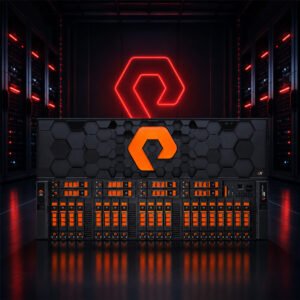
They may be used for demanding databases, analytics platforms, virtualized environments, and applications where fast response times are important.
When evaluating a Pure Storage solution, businesses should consider workload performance, usable capacity, data growth, connectivity, availability, and integration with their existing infrastructure.
CITS helps organizations evaluate these requirements and select a solution that supports their business applications effectively.
QNAP Storage Solutions in Egypt
QNAP provides NAS storage solutions for small businesses, medium-sized companies, branch offices, surveillance environments, and professional users.
CITS offers QNAP storage solutions in Egypt for file sharing, backup, remote access, multimedia storage, and centralized business data management.
QNAP systems are available in different sizes and configurations. Choosing the right model depends on the number of users, required storage capacity, drive configuration, network connectivity, and applications that will run on the device.
A properly configured QNAP NAS can provide businesses with a flexible and organized storage environment.
Storage for Virtualization
Virtualization environments require reliable storage because multiple virtual machines may depend on the same storage platform.
Slow or insufficient storage can affect the performance of applications, operating systems, databases, and users across the entire virtual environment.
When designing storage for virtualization, several factors must be considered:
- Number of virtual machines
- Type of applications
- Processor and memory requirements
- Storage capacity
- Input and output performance
- Network connectivity
- Redundancy
- Backup requirements
- Future growth
CITS helps businesses design storage solutions that support their virtualization workloads while maintaining performance and availability.
Storage for Backup and Disaster Recovery
A reliable storage system is an important part of a backup and disaster recovery strategy.
Businesses need to protect their data against hardware failure, accidental deletion, software errors, cyberattacks, and unexpected incidents. However, purchasing a storage system alone does not automatically create a complete backup strategy.
Organizations should define what data needs to be protected, how frequently backups should run, how long backup copies should be retained, and how quickly systems must be restored after an incident.
Backup copies may be stored locally, at another business location, in the cloud, or through a combination of different methods.
CITS can help businesses integrate storage platforms with backup and recovery solutions according to their continuity requirements.
Storage Capacity and Scalability
Storage requirements can grow quickly as businesses add more employees, applications, customers, devices, and digital services.
A system that provides enough capacity today may become insufficient in the future. For this reason, scalability should be considered during the initial storage planning process.
Businesses should evaluate both current data volume and expected growth. It is also important to consider usable capacity rather than relying only on the total raw capacity of installed drives.
RAID configuration, system files, snapshots, backup copies, and redundancy can all affect the amount of storage available for business data.
CITS helps organizations select scalable storage solutions that can be expanded as their requirements increase.
Data Availability and Redundancy
Many business applications require continuous access to data. A storage outage can interrupt employee productivity, customer services, databases, websites, and other critical operations.
Enterprise storage systems may include features designed to improve availability, such as redundant controllers, power supplies, network connections, and disk configurations.
The required level of redundancy depends on the importance of the stored data and the impact that downtime would have on the business.
High availability should also be supported by suitable backup, monitoring, network, server, and disaster recovery systems.
Storage Security
Centralizing data makes it easier to manage access, but storage security still requires careful planning.
Organizations should control which users and systems can access stored information. Permissions should be assigned according to job responsibilities and business requirements.
Storage security may include:
- User authentication
- Access permissions
- Network segmentation
- Data encryption
- Activity monitoring
- Regular software updates
- Secure backup copies
- Protection against unauthorized access
- Integration with cybersecurity systems
Storage should be considered part of the complete IT security environment rather than an isolated system.
CITS can help integrate storage with servers, switches, firewalls, backup systems, and other security controls.
How CITS Selects the Right Storage Solution
Every organization has different data storage requirements. Before recommending a solution, our team evaluates factors such as:
- Current storage capacity
- Expected data growth
- Number of users
- Connected servers
- Application requirements
- File-level or block-level access
- Virtualization workloads
- Performance expectations
- Backup and recovery needs
- Availability requirements
- Network infrastructure
- Required scalability
- Available budget
This assessment helps determine whether the organization needs NAS, SAN, or a combination of both.
It also helps identify the appropriate storage capacity, drive technology, connectivity, redundancy, and expansion options.
Storage Installation, Configuration, and Support
CITS provides end-to-end support for business storage solutions in Egypt.
Our services can include storage assessment, product selection, installation, configuration, integration, testing, and ongoing technical support.
We can also help integrate the storage platform with the organization’s servers, switches, virtualization environment, backup system, and existing network infrastructure.
Correct installation and configuration are essential for achieving the expected performance and availability. Storage settings should be aligned with the applications and workloads rather than relying only on default configurations.
Why Choose CITS for Storage Solutions in Egypt?
CITS provides complete IT infrastructure solutions rather than offering storage hardware as an isolated product.
Our team understands how storage interacts with servers, switching, cybersecurity, virtualization, backup, and business applications.
We work with leading storage manufacturers to provide different options for small businesses, medium-sized organizations, and enterprise environments.
Our approach focuses on understanding the business requirements, selecting the appropriate technology, and building a reliable storage environment that can support current operations and future growth.
Whether you need centralized file storage, enterprise SAN infrastructure, virtualization storage, backup capacity, or a complete data center solution, CITS can help you identify and implement the right platform.
Get a Quote for SAN and NAS Storage in Egypt
The right storage solution can improve data accessibility, application performance, business continuity, security, and IT management.
Contact CITS to discuss your data storage requirements and receive a suitable recommendation for your organization.
Our team can help you evaluate Dell, HPE, NetApp, Pure Storage, and QNAP solutions based on your required capacity, performance, applications, network infrastructure, availability, and budget.
Frequently Asked Questions
What is the difference between NAS and SAN storage?
NAS provides file-level storage that users access through shared folders over a network. SAN provides block-level storage that is accessed by servers and applications. NAS is commonly used for file sharing and backup, while SAN is often used for databases, virtualization, and enterprise applications.
Is NAS suitable for small businesses?
Yes. NAS can be suitable for small and medium-sized businesses that need centralized file storage, data sharing, local backup, remote access, or surveillance storage.
When does a business need SAN storage?
A business may need SAN storage when it runs demanding databases, multiple virtual machines, ERP systems, high-availability applications, or other workloads that require fast and reliable block-level storage.
Does CITS provide Dell and HPE storage in Egypt?
Yes. CITS provides storage solutions from manufacturers including Dell, HPE, NetApp, Pure Storage, and QNAP for different business and enterprise requirements.
Can storage capacity be expanded later?
Many business storage systems support capacity expansion. The available expansion options depend on the selected platform, drive configuration, supported enclosures, and system limitations.
Is RAID the same as backup?
No. RAID can provide disk redundancy or improve performance, but it does not replace backup. Separate backup copies are still required to protect data against deletion, corruption, cyberattacks, and major infrastructure failures.
Can storage solutions support virtualization?
Yes. SAN and NAS platforms can support virtualization environments when they provide suitable capacity, performance, connectivity, and redundancy for the required virtual machines.
Does CITS provide storage installation and configuration?
Yes. CITS provides storage assessment, selection, installation, configuration, integration, testing, maintenance, and technical support according to the project requirements.